Insight
Choosing a workplace water station used to be fairly simple. You ordered a bottled cooler, found somewhere to store the replacement bottles and arranged regular deliveries.
That can still work in smaller or temporary locations. Across larger offices, schools, leisure facilities and multi-site estates, it can create more work than expected.
Bottles need ordering, receiving and storing. Empty containers have to be collected. Someone must also notice when the supply is running low.
A mains-fed water station works differently. It connects to the building’s water supply and provides drinking water without relying on replacement bottles.
So, which option is right for your organisation?
A mains-fed water station, sometimes called a plumbed-in water cooler, connects directly to the building’s water supply.
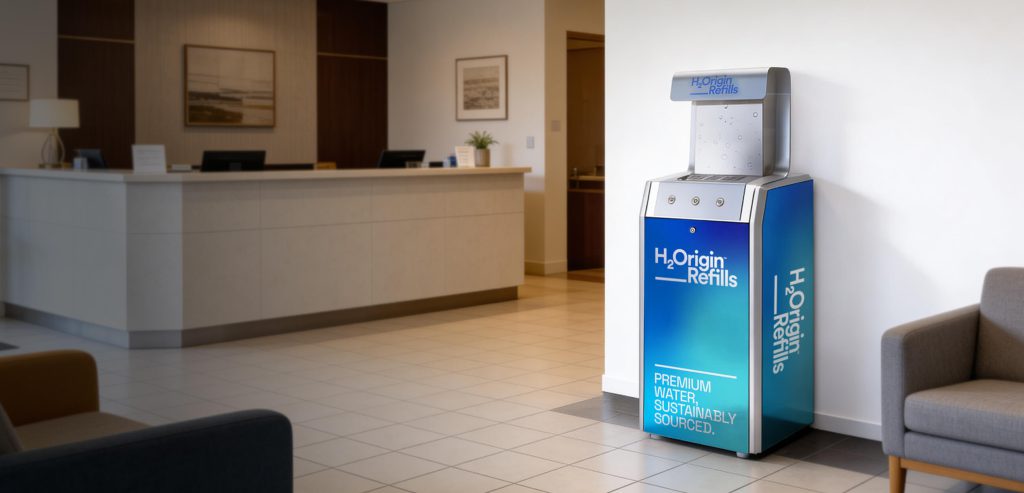
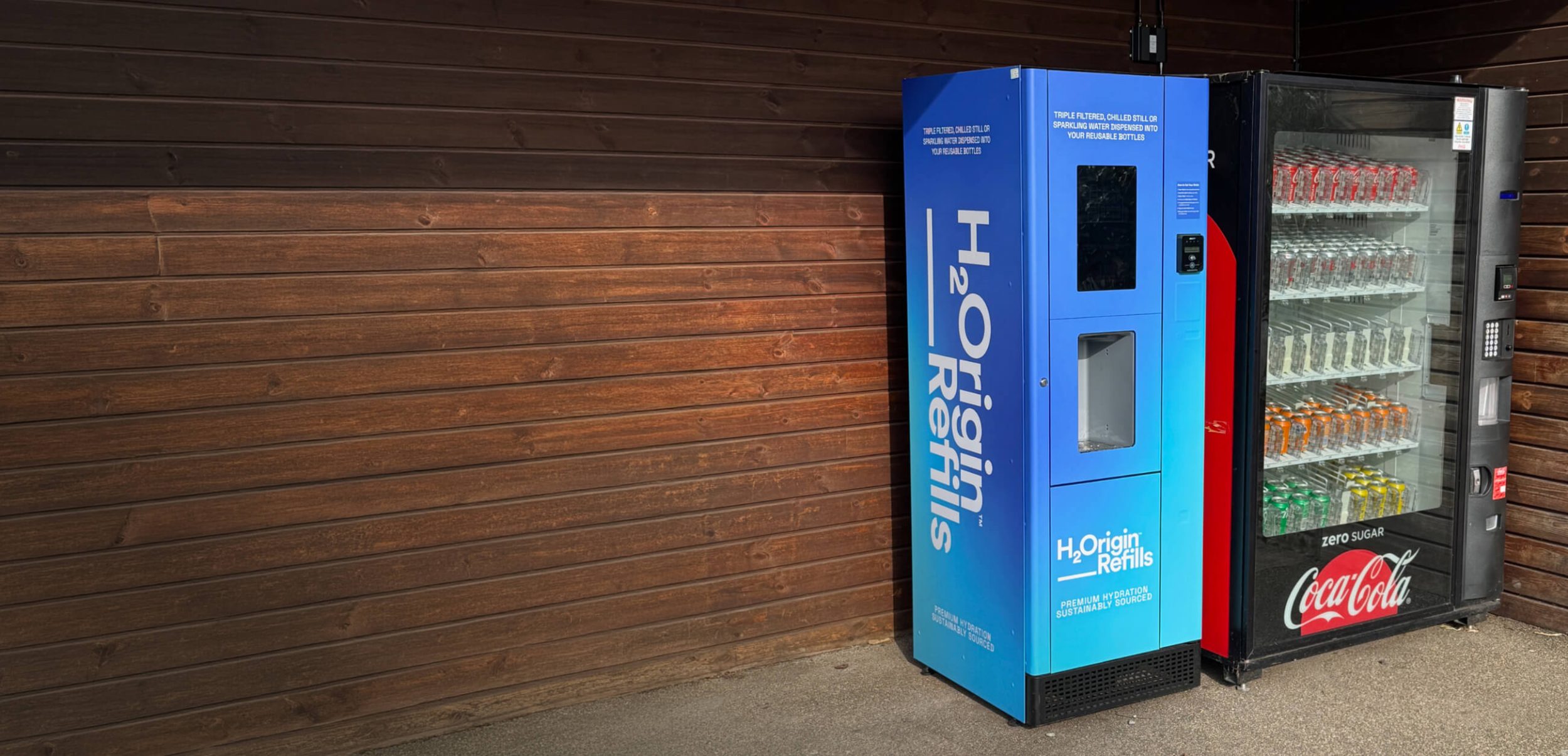
The exact features vary by station. H2Origin’s smart connected refill stations provide filtered, chilled water and are designed for demanding commercial environments.
Because the water comes from the mains, there is no need to store and replace large bottles. Filters and internal components still require planned servicing, so mains-fed does not mean maintenance-free.
A bottled water station uses a large pre-filled container fitted to the station.
It can be useful where a suitable mains connection is unavailable or where the installation is only temporary. It is also relatively straightforward to place a bottled station in a new location.
The trade-off is the ongoing handling.
Replacement bottles need to be ordered, delivered and stored. Someone must change them when they are empty, and space is needed for both full and used containers.
That may be manageable at one quiet location. It becomes more demanding when several buildings or sites are involved.
A bottled water station can only provide the water held in its current bottle. When that bottle is empty, the supply stops until it is replaced.
A mains-fed station draws from the building’s water supply, making it better suited to sustained use. However, the station still needs enough chilling and refill capacity for the environment.
This matters in places where demand arrives in peaks rather than evenly throughout the day. A station in a school corridor may be busiest between lessons. A workplace station may face a rush at lunchtime. A leisure facility may see demand before and after classes.
The right question is not simply how many people use the building. It is how many may need water at the same time.
H2Origin specifies its managed infrastructure around the setting, with high-capacity solutions available for sectors including education, transport, sports and leisure.
Bottled water stations require storage space for replacement containers.
There is also the time involved in managing orders, accepting deliveries, moving bottles and arranging collections. These tasks may seem minor individually, but they add up across a large estate.
Mains-fed stations remove the need for regular water-bottle deliveries. They still require filters, cleaning and maintenance, but this can be included within a planned service programme.
H2Origin’s fully managed service covers the process from site survey and specification through to installation, filter changes, hygiene management and performance checks.
Both bottled and mains-fed water stations need regular cleaning and maintenance.
Frequently touched areas such as buttons, refill points and bottle rests must be kept clean. Filters need changing according to the station’s specification, and faults should be dealt with promptly.
The real difference is often how that maintenance is managed.
Where an organisation owns several unrelated water stations, servicing may be split between different suppliers or left