Insight

Schools are expected to provide free, fresh drinking water. That much is clear.
The bigger question is whether pupils can access it easily, quickly and at the points in the day when they need it most.
In many schools, water is technically available but not always convenient. It may be tucked away, create queues at breaktime, come from older fittings that are difficult to use with refillable bottles, or lack clear ownership for servicing and hygiene.
That is where well-placed water refill stations can help.
They give schools a practical way to support hydration, reduce single-use plastic and make water part of the normal school day.
The school food standards state that free, fresh drinking water must be available at all times. GOV.UK guidance also says water should be the default drink for every child.
That does not mean every school has to install water refill stations.
It does mean schools should look beyond basic provision and ask whether drinking water is easy to find, easy to use and available across the school day, including breakfast clubs, break times, lunch and after-school provision.
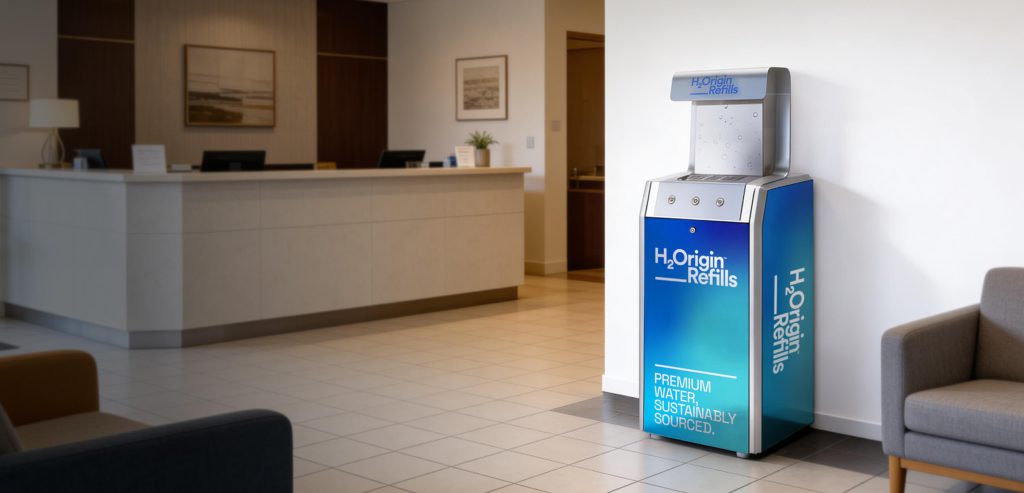
For schools, colleges and universities reviewing their current setup, H2Origin’s education water refill station service is designed around the realities of busy education environments: high footfall, short break windows, stretched estates teams and growing sustainability expectations.
A school may provide drinking water but still have a poor experience for pupils.
Common issues include:
If pupils cannot refill quickly, many will not bother. If water is hidden, slow or unappealing, bottled drinks become the easier option.
Good water provision needs to reflect how pupils actually move through the school.
Behaviour change is easier when the better option is also the easiest option.
Well-placed water refill stations make water visible. Pupils see others refilling, reusable bottles become part of the routine, and water becomes part of the school environment rather than something hidden away.
Strong locations often include:
The right location depends on layout, footfall and peak demand. A small primary school will not have the same needs as a large secondary school, college or multi-academy trust.
That is why site assessment matters. H2Origin helps schools specify water refill stations around location, usage, capacity and maintenance, rather than simply placing equipment wherever space happens to be available.
The canteen is one of the most important places to improve water access.
If pupils are buying bottled drinks because water is hard to find, slow to refill or not appealing, the issue is not motivation. It is design.
A well-placed water refill station can give pupils quick access to chilled, filtered water where food and drink choices are already being made.
That can help schools:
It also gives catering and facilities teams a cleaner, more managed approach to water provision.
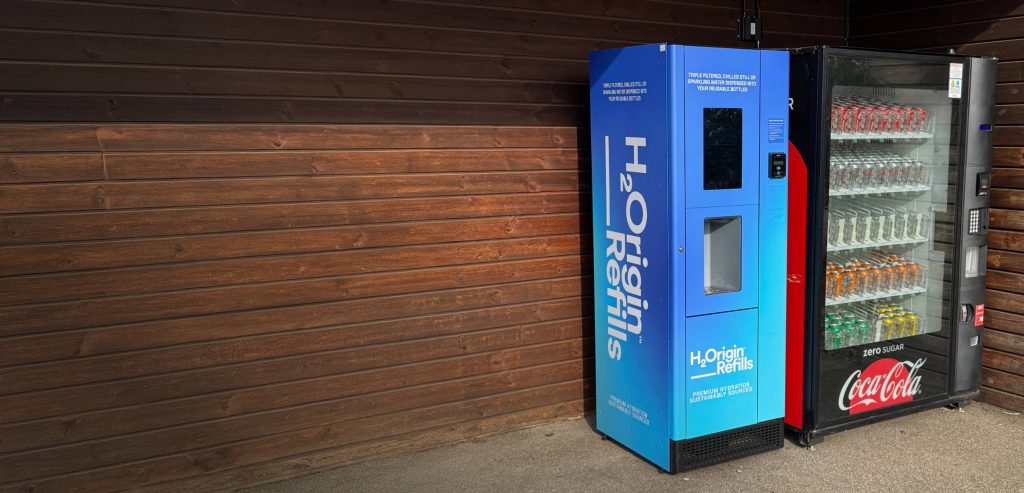
For higher-demand areas such as canteens, concourses and busy corridors, H2Origin’s smart connected refill stations are designed to provide reliable, monitored water access in demanding environments.
Water access is not only a facilities issue. It is also part of pupil wellbeing.
Pupils need reliable access to drinking water during lessons, breaktimes, lunch, sport, exams and after-school activities.
For that to work properly, water refill stations need clear ownership. Schools should know who is responsible for cleaning, filter changes, servicing, hygiene checks and fault reporting.
A managed service helps reduce the risk of missed maintenance, unclear responsibility and long-running faults.
H2Origin’s turnkey managed service brings site survey, installation, planned maintenance, filter changes, hygiene management, monitoring and reporting into one service, reducing the burden on internal teams.
One of the biggest missed opportunities in school water provision is measurement.
Schools often invest in sustainability projects but struggle to show the impact clearly. Connected water refill stations can turn everyday refill behaviour into useful data.
H2Origin’s live data and ESG reporting can track usage, plastic bottle displacement and environmental impact across individual sites or wider estates.
That data can support:
This is where water refill stations become more than a facilities upgrade. They become a visible, measurable sustainability initiative pupils can understand and take part in.
Before installing water refill stations, schools should review how water is currently accessed across the site.
Useful questions include:
These questions help schools avoid installing water provision where it is easiest to place, rather than where it will have the greatest impact.
Providing drinking water should be simple. In practice, it can become fragmented.
Different sites use different suppliers. Some equipment is maintained well, some is not. Usage is unclear. Plastic reduction is hard to evidence. Pupils still buy bottled drinks because refilling is not easy enough.
A better approach starts with the school day itself.
Where are pupils moving? When is demand highest? Where are food and drink choices being made? Which areas need better access? How will the school know whether the investment is working?
H2Origin helps schools, colleges and multi-academy trusts improve water provision through site survey, installation, maintenance, hygiene management, monitoring and reporting.
Book a free Hydration Review to assess your current water provision, identify pressure points and understand where water refill stations could have the greatest impact.
Yes. School food standards guidance says free, fresh drinking water must be available at all times.
No. Schools are not required to install water refill stations specifically, but they can help make drinking water easier to access in busy areas such as canteens, corridors and sports facilities.
High-footfall areas usually work best, including dining halls, canteens, main corridors, sports areas, sixth form spaces and shared social spaces.
Yes. By making refilling easier, schools can reduce reliance on single-use bottled drinks. Connected stations can also provide usage and plastic bottle displacement data.
Yes. They are useful for trusts that want consistent water provision, central reporting and a managed approach across multiple sites.