Insight

In the last few years, reusable bottles have moved from “nice to have” to everyday essentials. Students carry them between lectures, office workers bring them to meetings, and gyms, hospitals, and public venues now expect to see them in constant use.
A recent UK study reported that over 85% of young adults regularly carry a reusable bottle, with Gen Z leading the shift. On paper, that should mean fewer single-use bottles and a significant win for sustainability.
But there’s a gap, and it isn’t behavioural.
Despite carrying reusable bottles, many people still hesitate to refill them in public spaces. The most common concerns include:
Traditional water fountains or ageing coolers don’t offer the reassurance people now expect. As a result, even those committed to reducing waste sometimes default back to single-use bottled drinks.
Hydration standards have changed. Users expect:
This is especially true in education settings, where refill habits form early. If a college or university provides poor-quality refill options, behaviour follows. When a refill is appealing and visible, behaviour follows in the right direction instead.
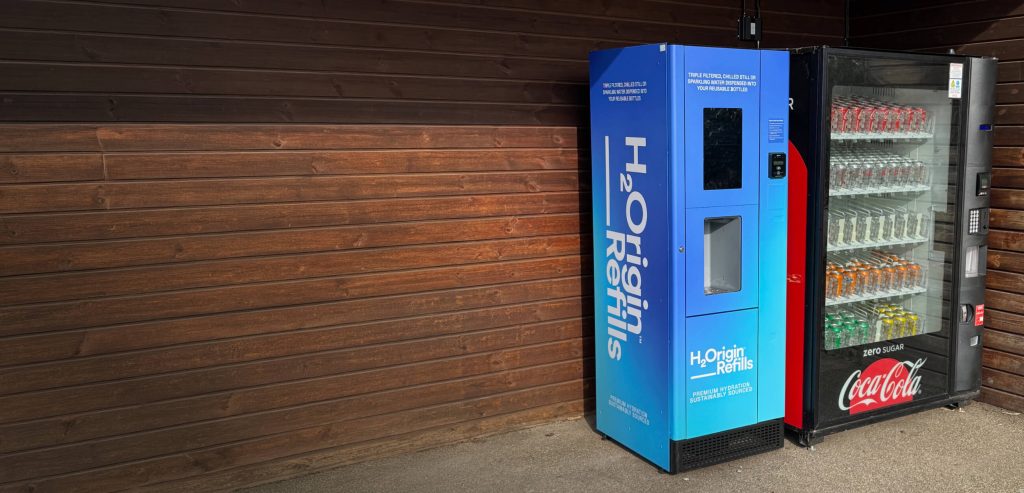
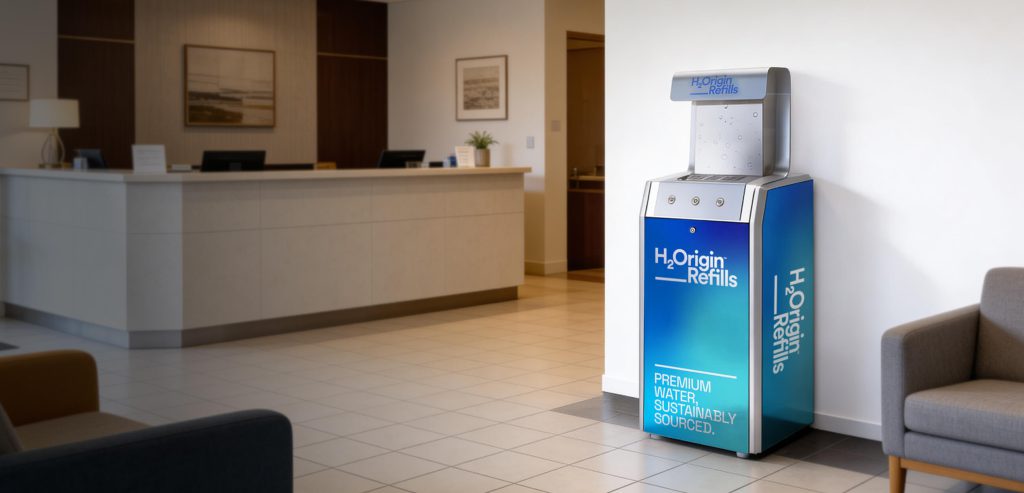
H₂Origin stations are designed around real user needs, not assumptions. They’re built for busy environments where people expect performance and reliability- universities, hospitals, transport hubs, sporting venues and workplaces.
Key differences include:
When the experience is better than buying a bottle, people naturally choose to refill.
People are ready to refill. The infrastructure just needs to meet them there.
When organisations install reliable, visible, hygienic refill stations, refill behaviour becomes the norm – not the exception.